


Your Guide to the Intercity Bus System
Want to get from the cloud forests of Monteverde to the beaches of Manuel Antonio without breaking the bank? Costa Rica’s intercity bus system is your ticket. It’s how most people travel longer distances across the country, offering a cheap and genuinely local way to see everything Costa Rica has to offer.
But while it’s a great system, it’s not exactly straightforward.
Here’s a look at the good and the bad of traveling between cities by bus.
San José is the heart of the intercity bus network, but don’t look for a single Grand Central Station. Instead, different bus companies operate out of their own terminals scattered throughout the city. Finding the correct one is the first step of your journey.
 Pro-Tip: Don’t listen to the people hanging around outside the bus stations offering to help you or sell you tickets. They are often scammers. Always go inside to the official ticket window (“boletería”) to get legitimate information and tickets.
Here are the key terminals for long-distance travel:
- Terminal 7-10: One of the more organized terminals. Departs for: La Fortuna (Arenal Volcano), Monteverde, Jacó, and Liberia.
- Tracopa Terminal: The main hub for the southern Pacific coast. Departs for: Manuel Antonio National Park, Dominical, Uvita, and connections to the Osa Peninsula.
- Terminal del Caribe (MEPE): Your starting point for the Caribbean coast. Departs for: Puerto Viejo, Cahuita, and Limón.
- Pulmitan de Liberia: The go-to for the Guanacaste province. Departs for: Liberia and popular beaches like Playas del Coco and Tamarindo.
- Alfaro Terminal: Head here to get to the port city of Puntarenas, where you can catch a ferry to the Nicoya Peninsula.
Scoring Your Ticket
For almost all intercity routes, buying a ticket is an old-school, in-person process. You’ll go to the ticket window at the correct terminal to make your purchase.
Pro-Tip: For popular long-distance routes, it’s wise to buy your ticket at least a day in advance, especially during tourist season (December-April) or on weekends, as seats sell out. And remember, cash is king. While some main terminals may accept cards, many don’t. Always have small bills in Costa Rican colones; drivers won’t be able to break large notes for a cheap fare.
What the Intercity Ride is Like
When traveling between regions, you’ll generally find two types of services:
- Directo: Think of this as the express option. These buses make very few stops, connecting major destinations more quickly. They are typically more comfortable and are more likely to have air conditioning.
- Colectivo: This is the scenic, stop-everywhere route. These buses still travel long distances between cities but will stop in many small towns along the way. They are slower but are great for reaching less-common destinations.
Bus Companies, Not One Network
Unlike Europe where one central system handles everything, Costa Rica’s buses are run by private companies. Each has its own routes, schedules, and stations. For example, you’ll find companies like Tracopa (south to Uvita/Manuel Antonio) or Pulmitan de Liberia (northwest to Guanacaste).
Stations in San José
Most buses originate from San José, but here’s the catch: every company has its own terminal. That means knowing which station to go to is crucial.
Buying Tickets
Tickets are sold at the station (cash is king, colones preferred), and sometimes online for bigger routes. Popular destinations can sell out in high season, so buy a day or two ahead when you can.
Assigned Seats
Many intercity buses give you a seat number. On others, it’s first-come, first-served. Either way, arrive early to snag a good spot.
Luggage Handling
Big bags go underneath the bus (you’ll get a tag), and you keep smaller bags with you. Always keep valuables in your carry-on.
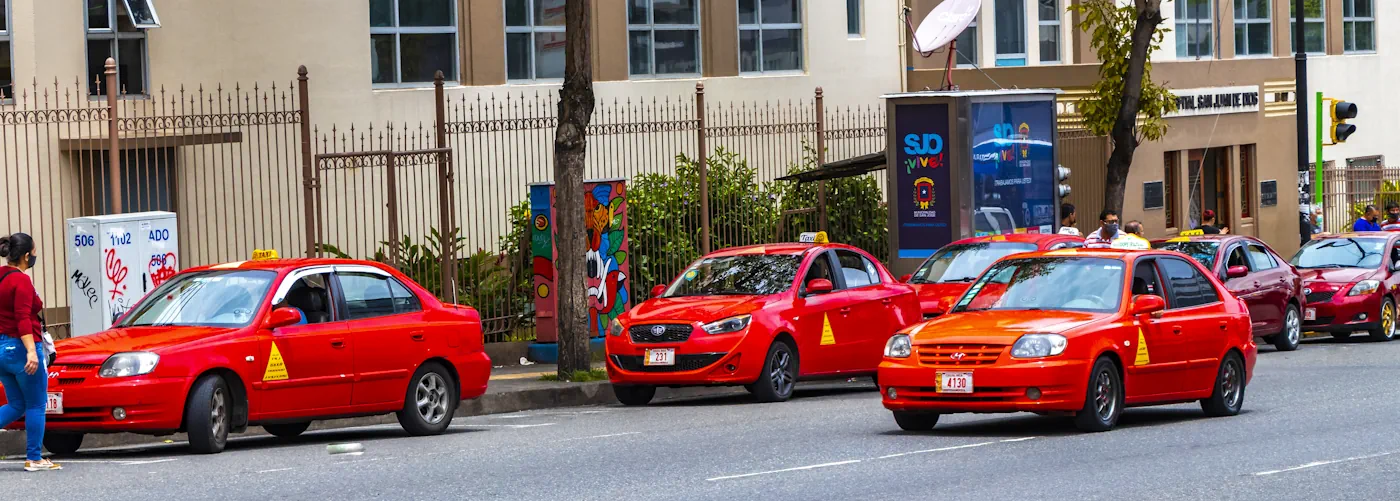
- Red Taxis Are the Official Ones
In Costa Rica, the legal, licensed taxis are bright red with a yellow triangle on the side. These are regulated, metered, and usually safe. - Airport Taxis
At the airports, you’ll also see official orange taxis that specialize in airport runs. They’re legit, but usually pricier than red taxis. - Uber (and Others)
Uber does work in Costa Rica (mainly around San José, Liberia, and some popular tourist towns). Prices are often lower than red taxis. But it’s technically not fully regulated, so there’s a bit of a “gray zone” about legality. Locals use it all the time, though. - Other Apps
In some regions, apps like Didi or inDriver pop up, but Uber is the most reliable and widely used.
Book your rental car with a refundable option—no one likes losing their deposit when plans take a detour.
- The Upside (Pros):
- Incredibly Cheap:
You can travel clear across the country for just a few dollars. It’s the ultimate budget-friendly way to connect your destinations. - Goes Almost Everywhere:
This web of bus routes connects nearly every major town and tourist hotspot you’d want to visit. - An Authentic Experience:
You’ll be sharing the ride with locals, giving you a real glimpse into the country’s “Pura Vida” culture that you wouldn’t get in a private shuttle. - Convenient & Simple:
No need to navigate or worry about driving. - Available in Cities & Tourist Hubs:
Easy to grab in San José, Liberia, Tamarindo, La Fortuna, and other busy towns. - No Parking Stress:
Especially helpful in crowded city centers. - Safer for Nighttime Trips:
If you’ve been out for dinner or drinks, a ride is better than driving unfamiliar roads. - Cash or App:
Taxis take cash (colones, sometimes dollars), while Uber goes straight through the app.
Cons of Using Taxis & Rideshares
- Limited in Rural Areas:
Outside major cities and tourist towns, rideshares are scarce, and hailing a taxi can be tough. - Language Barrier:
Most taxi drivers speak little English, so a few Spanish phrases (or Google Translate) come in handy. - Meter Issues:
Some drivers may “forget” to use the meter (called a maría). Always insist on it to avoid inflated fares. - Airport Hustlers:
You’ll likely get approached by unofficial drivers offering rides—best to avoid them. - Surge Pricing / High Fares:
Ubers may spike in price during peak times, and taxis charge extra for night rides, luggage, or airport trips.
Local Tips for a Great Experience
- Look for the Yellow Triangle:
That’s the sign of an official, licensed taxi. Avoid unmarked cars offering rides. - Always Ask for the Meter
(“¿Puede poner la maría, por favor?”) — this keeps the fare fair. - Use Uber When You Can:
It’s often cheaper, and you’ll know the price upfront. - Have Cash Ready:
Not all taxis accept cards. Carry colones for shorter trips. - Know the Landmarks:
Addresses in Costa Rica are famously vague (“200 meters south of the church”). Use landmarks or pin locations on your phone. - At the Airport:
Stick to official orange airport taxis or book an Uber pickup a short walk away from the terminal (locals do this trick to save money). - Safety First:
Sit in the back seat, don’t share rides with strangers outside the app, and trust your instincts.
Taxis and rideshares in Costa Rica are a solid option if you’re sticking to cities or touristy areas and don’t want the stress of driving. They’re convenient, relatively affordable, and easy to use once you know the system.
Just keep in mind that availability drops the farther you get from big towns. If your plans include remote beaches or mountain lodges, you might want to pair taxis/rideshares with buses or even a rental car.
But for short hops, airport transfers, or nights out in San José or Tamarindo? A red taxi or an Uber will get you there without a hitch.