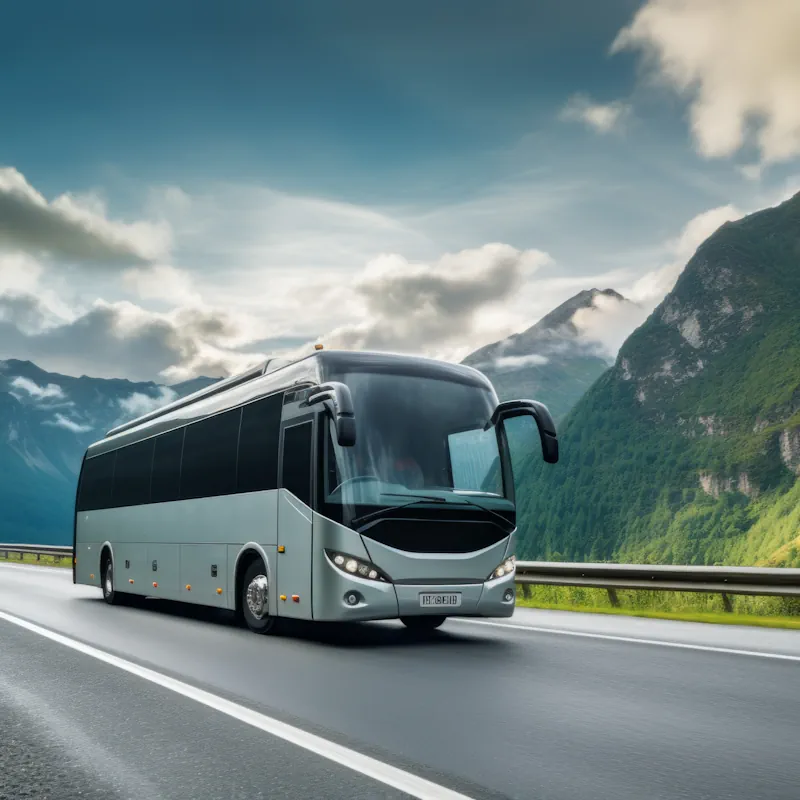
INTERCITY BUS
Hit the Open Road
for More Adventures!
Unbeatable Value
National Network
Relaxing Ride
Comfortable Travel
High-Altitude Views
Sustainability
Intercity buses are one of the best ways to travel across Costa Rica for an affordable and authentic experience. They connect nearly every city and beach town, offering reliable service while letting you relax and enjoy the scenery.
Benefits of Intercity Bus Travel
The Real Way to Travel: Why “El Bus” is a Top Choice for Explorers
Unbeatable Value
Buses are the most budget-friendly option. Even 6-hour journeys across the country rarely exceed $15 USD, allowing you to spend more on tours and experiences.
National Network
The network reaches almost every town. If there is a road, there is likely a bus, providing access to remote gems that shuttles or flights often skip.
Relaxing Ride
Avoid the anxiety of navigating river crossings, potholes, or heavy city traffic. Board the coach, recline your seat, and let the professional driver handle the road.
Comfortable Travel
Modern long-distance “Directo” coaches feature reclining seats, powerful air conditioning, and often onboard Wi-Fi for a smooth journey.
High-Altitude Views
Intercity coaches sit higher than cars, offering superior views over roadside foliage and mountain guardrails—perfect for spotting the jungle scenery.
Sustainability
By choosing public transit, you significantly reduce your carbon footprint per mile compared to renting a private SUV or taking domestic flights.
How To: Ride The Intercity Bus Like a Pro
Master the Journey: A Practical Guide to Navigating the National Bus Network
Identify Your Terminal
San José does not have one central bus station. Each company operates from its own terminal. For example:
- Tracopa: For southern destinations (Manuel Antonio, Quepos, Uvita, Golfito).
- MEPE / Terminal Atlántico Norte: For the Caribbean coast (Puerto Viejo, Cahuita, Limón).
- Terminal 7-10: For popular northwest spots (Monteverde, Jacó, Santa Teresa, Guanacaste).
- Pulmitán de Liberia: For Liberia and northern beaches (Playas del Coco).
Check the Schedule
Schedules change frequently and “official” websites are not always updated.
- Use CentroCoasting or the Moovit App for the most reliable route data.
- Directo: The gold standard for intercity travel. These buses only stop at major designated stations, significantly reducing travel time.
- Colectivo: Cheaper but slower. These stop for anyone on the side of the road. Ideal for reaching very specific rural points between major cities.
Purchase Your Ticket
- Tickets are mostly sold at the boletería (ticket window). Arrive 60 minutes early during peak hours.
- Only a few major companies (like Tracopa or MEPE) offer online booking via apps like Passer or their own websites.
- Keep your ticket handy for inspection.
- If your destination is smaller, you may need a transfer.
Stow Bags
- Larger bags go underneath the bus.
- Carry valuables (passport, phone, wallet) with you.
- You may receive a luggage claim tag—keep it safe.
The Journey
- Routes longer than 3–4 hours usually make one 15–20 minute stop at a restaurant or soda for food and restrooms.
- If you aren’t going to the final station, look for the “Stop” button or pull the cord.
- If you don’t see a stop button or pull cord, say clearly: “¡Parada, por favor!”
Intercity Bus Depots
Master the Journey: A Practical Guide to Navigating the National Bus Network
San Jose
In Costa Rica, the vast majority of intercity bus depots are concentrated in the capital, San José, which serves as the nation’s transportation hub. Instead of a single central station, San José has numerous distinct terminals scattered throughout the city, each dedicated to specific regions or bus companies. The table below shows a list of depots in San Jose.
| Terminal Name | Primary Destinations | Location in SJ | Bus Companies |
|---|---|---|---|
| Terminal 7-10 | La Fortuna Monteverde Jacó Guanacaste | Calle 8, Ave. 7 & 9, Merced District | Autobuses Tilarán |
| Terminal MEPE | Puerto Viejo (Caribbean) Cahuita (Caribbean) Manzanillo (Caribbean) | Calle Central, Ave. 11 & 13, Cathedral District | Transportes MEPE |
| Terminal Tracopa | Manuel Antonio Uvita Dominical | Plaza Víquez, Calle 5, Ave. 20, Cathedral District | Tracopa |
| Terminal de Buses Caribeños | Guápiles (Caribbean) Siquirres (Caribbean) Limón (Caribbean) | Calle Central, Ave. 15, Carmen District | Grupo Caribeños |
| Terminal del Atlántico Norte | Sarapiquí Río Frío Puerto Viejo de Sarapiquí | Calle 12, Ave. 7 & 9, Merced District | Transportes Unidos de la Atlántida |
| Terminal Pulmitan de Liberia | Liberia Guanacaste | Calle 24, Ave. 5 & 7, Merced District | Pulmitan |
| Terminal de Buses Alfaro (Coca-Cola) | Samara (Guanacaste) Nosara Tamarindo | Ave. 5, Calle 14 & 16, Merced District (Near Coca-Cola) | Empresa Alfaro |
| Terminal Musoc | San Isidro de El General (Pérez Zeledón) | Calle Central, Ave. 22 & 24, Cathedral District | Musoc |
| Terminal de Puntarenas | Puntarenas (Pacific Port) | Calle 16, Ave. 10 & 12, Merced District | Empresarios Unidos de Puntarenas |
Outside San Jose
Outside of the capital, major towns and significant tourist destinations, such as Liberia, La Fortuna, or Quepos, will have its own central bus terminal, which can sometimes be at the local “soda”.
| City/Town | Location | Primary Connections |
|---|---|---|
| La Fortuna | Terminal de Buses F9C3+4R3, Alajuela Province | San José Tilarán (Monteverde) Ciudad Quesada |
| Liberia | Terminal Municipal de Liberia | San José Playas del Coco (Guanacaste) Tamarindo (Guanacaste) Peñas Blancas (Nicaragua border) |
| Monteverde | Terminal de Buses de Santa Elena | San José Tilarán Puntarenas |
| Puerto Viejo | Main bus stop in the center of town | San José, Cahuita Manzanillo Sixaola (Panama border) |
| Quepos | Terminal de Buses Quepos | San José Manuel Antonio Dominical Uvita Puntarenas |
| San Isidro | Terminal de Buses Musoc | San José Dominical Uvita |
| Puntarenas | Terminal de Buses de Puntarenas | San José Monteverde Quepos Liberia |
Local Tips
To ride a local city bus (the urbano) in Costa Rica like a true “Tico” in 2026, you need to navigate a mix of high-tech payment systems and old-school street smarts.
No Central Depot
There is no master station—you must go to the specific terminal for your route. Review the Intercity Bus Depots tables that show the various bus depots
Bring Some Cash
Cash is King. Even if the terminal takes cards, always carry Costa Rican Colones. Drivers on smaller routes or colectivos do not accept cards or USD.
Safety First
Terminals are high-traffic. Watch your bags and avoid late-night waiting alone. Never place valuables in checked luggage or stowbags.
AC Warning
Buses are freezing inside. Bring a light sweater even in the summer heat.
Airport Shortcut
Catch buses at “Puente Villa Bonita” in Alajuela to avoid going to downtown San José.
Getting Off the Bus
If you don’t see a stop button or pull cord, say clearly: “¡Parada, por favor!”