
PreColumbian Gold Museum

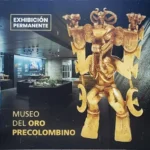
Gold Museum (Museo del Oro Precolombino)

Costa Rica’s Golden Legacy, Hidden Underground. Located beneath the Plaza de la Cultura in the center of San José, the Pre-Columbian Gold Museum houses one of the most spectacular archaeological collections in Latin America. This subterranean vault protects over 1,600 artifacts dating from 500 AD to the Spanish conquest.

National Theater (Teatro Nacional)

National Theatre (Teatro Nacional)

A Renaissance Masterpiece, Fuelled by Coffee.
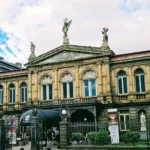
Considered the most historically significant and architecturally beautiful building in Costa Rica, the National Theatre (Teatro Nacional de Costa Rica) is a masterpiece of Neoclassical design located in the heart of downtown San José

National Theater (Teatro Nacional)

National Theatre (Teatro Nacional)

A Renaissance Masterpiece, Fuelled by Coffee.
Considered the most historically significant and architecturally beautiful building in Costa Rica, the National Theatre (Teatro Nacional de Costa Rica) is a masterpiece of Neoclassical design located in the heart of downtown San José

Costa Rican Glossary

¡Upe!

OO-peh!
A common call to see if anyone is home or to get someone's attention at a house or small business. It's more polite than shouting 'hello?'

In a sentence: "He walked up to the pulpería and called out, '¡Upe!'"

¿Al chile?

al CHEE-lay?
A slang phrase meaning 'Really?', 'For real?', or 'Seriously?'. Used to express disbelief or to ask for confirmation.

In a sentence: "Q: 'I saw a jaguar on the trail.'
A: '¿Al chile?'"

Birra

BEE-rrah
Slang for 'beer.' Borrowed from the Italian word.

In a sentence: "It's hot today, I need a cold birra."

Bomba

BOHM-bah
Literally 'bomb.' In Costa Rica, this refers to a gas station.

In a sentence: "We need to stop at the next bomba to fill up the tank."

Brete

BREH-teh
Slang for 'work' or 'a job.'

In a sentence: "I have to go to brete early tomorrow morning."

Buena Nota

BWEH-nah NO-tah
Literally 'good note.' A phrase used to describe a person who is cool, kind, or has good vibes. It can also mean 'cool' or 'right on.'

In a sentence: "The surf instructor was really buena nota."

Cacique

kah-SEE-kay
Costa Rica's most popular brand of guaro, a clear liquor made from sugarcane. It's the go-to spirit for many local mixed drinks and shots.

In a sentence: "Can you make me a chili-guaro with Cacique?"

Casado

kah-SAH-doh
Literally 'married man.' It's the quintessential Costa Rican lunch plate, consisting of rice, black beans, a salad, fried plantains, and a choice of protein (fish, chicken, beef, or pork).

In a sentence: "I'm hungry, I'm going to order a casado with chicken."

Chepe

CHEH-peh
colloquial and affectionate nickname for the capital city, San José.

In a sentence: "We're heading to Chepe for the weekend to visit the museums."

Chunche

CHOON-cheh
A catch-all word for 'thing,' 'stuff,' or 'what-cha-ma-call-it.' Used when you can't 1remember the name of an object.

In a sentence: "Can you pass me that chunche from the table?"

Colones

co-LOH-nays
The Costa Rican Colón (₡), named after Christopher Columbus, is the official currency of Costa Rica, recognized for its vibrant banknotes that celebrate the nation's rich wildlife.

In a sentence: "Excuse me, how many colones is the casado con pollo?"

Empanada

em-pah-NAH-dah
A savory pastry, typically fried, filled with ingredients like cheese, beans, potatoes, or shredded meat. A popular and quick snack or breakfast item found in sodas and bakeries.

In a sentence: "I'll grab a cheese empanada and a coffee for breakfast."

Gallo

GAH-yo
Literally 'rooster.' In Costa Rican food culture, a 'gallo' is a small snack, similar to a soft taco. It's typically a corn tortilla topped with a small portion of a filling like shredded meat, potatoes, or picadillo.

In a sentence: "I'm not very hungry, I'll just have a gallo de papa (potato gallo)."

Gallo Pinto

GAH-yo PEEN-toh
The national breakfast dish of Costa Rica. It's a mix of rice and black beans, often cooked with onions, sweet peppers, and cilantro. Usually served with eggs and sour cream.

In a sentence: "I could eat gallo pinto for breakfast every day."

Guaro

GWAH-roh
The generic term for alcohol, but most often refers to Cacique, the national sugar-cane liquor of Costa Rica.

In a sentence: "Let's do some shots of guaro!"

Macho / Macha

MAH-cho / MAH-chah
Slang for a light-skinned or blonde person (macho for male, macha for female). It is not derogatory.

In a sentence: "My friend with the blonde hair is often called 'macha' by the locals."

Mae

my
The Costa Rican equivalent of 'dude' or 'bro.' Used informally and very frequently between friends, mostly by men.

In a sentence: "Mae, let's go grab a beer."

Pulpería

pool-peh-REE-ah
small neighborhood convenience store or corner shop that sells basic groceries, snacks, and drinks.

In a sentence: "I need to go to the pulpería to buy some eggs."

Pura Vida

POO-rah VEE-dah
Literally 'Pure Life.' The national motto of Costa Rica. It's a greeting, a farewell, and a way of life meaning everything's great, life is good, and you're thankful for what you have.

In a sentence: "Q: How are you? A: Pura Vida!"

Salado

sah-LAH-doh
Literally 'salty.' Used to describe someone who has bad luck or is in a tough situation. It means 'too bad' or 'you're out of luck.'

In a sentence: "You missed the last bus? ¡Qué salado!"

Soda

SOH-dah
A small, family-run, traditional Costa Rican restaurant. Sodas serve local dishes like 'casado' at very affordable prices. This is the best place for an authentic meal.

In a sentence: "We had lunch at a soda on the way to the beach."

Tico / Tica

TEE-ko / TEE-kah
A colloquial term for a native Costa Rican man (Tico) or woman (Tica). It comes from the local tendency to add '-ico' to the end of words to form a diminutive.

In a sentence: "The local Ticos are very friendly to tourists."

Tuanis

TWAH-nees
slang word meaning 'cool,' 'awesome,' or 'great.' Believed to be derived from spelling the English words 'too nice' in Spanish.

In a sentence: "That surf spot is tuanis!"

Hit the open road
for more adventures!

City-to-City Buses

Very Affordable ♦ Country-Wide Network ♦ Relaxing

City-to-City buses are one of the best ways to travel across Costa Rica if you’re looking for an affordable and authentic experience. They connect nearly every town and city, offering reliable service while letting you sit back and enjoy the scenery. It’s a budget-friendly choice that gives you a true taste of local life on the road.


How to Ride City-to-City Like a Local

A step-by-step Guide to navigating the city-to-city bus system across Costa Rica.

1. Finding Schedule

This is the most important part. The number one way to know where a bus is going is to read the big sign in the front windshield. It will list the final destination and often key stops along the way. In big cities like San José, you might see route numbers, but the destination name is what you should always look for.

Local Tip: The easiest way to find your route is to just ask! Costa Ricans (“Ticos”) are incredibly friendly. Ask your hotel host or a local shopkeeper, “¿Qué bus para [your destination]?” (Which bus for…?). In San José, an app like Moovit can be a lifesaver for figuring out routes and stop locations.

City Bus Stop

2. Go To The Terminal

In bigger cities, you’ll find official bus stops, sometimes with a bench and a shelter. In smaller towns and along roads, a “bus stop” might just be a specific patch of sidewalk or a signpost. If you’re not sure, look for a small group of people waiting—chances are, it’s a bus stop.
Local Tip:  Don’t just stand there! As the bus approaches, flag it down by sticking your arm out. This signals to the driver that you want to get on. If you don’t, they might just drive right by.

Bus Fare

3. Buy Ticket

Once the bus stops, hop on through the front door. You pay the driver directly as you board.
This is where the most important rule comes in: Cash only, and only in Costa Rican Colones (CRC). Have small bills and coins ready. The fare will be incredibly cheap, and the driver will not be able to break a ₡10,000 or ₡20,000 note (let alone US dollars) for a ₡400 ride. Hand the driver your coins, and find a seat.

4. Stow Bags

When you’re getting close to your destination, you need to signal to the driver that you want to get off. Look for a button on the poles or a pull-cord running along the top of the windows. Press or pull it about a block before your stop, and the driver will pull over at the next official parada.
Local Tip: If you have no idea where your stop is, tell the driver where you’re going when you get on. Just say, “Me avisa en [your destination], por favor?” (Can you let me know at…?). They’re usually happy to help you out.

4. Board & Find Seat

When you’re getting close to your destination, you need to signal to the driver that you want to get off. Look for a button on the poles or a pull-cord running along the top of the windows. Press or pull it about a block before your stop, and the driver will pull over at the next official parada.
Local Tip: If you have no idea where your stop is, tell the driver where you’re going when you get on. Just say, “Me avisa en [your destination], por favor?” (Can you let me know at…?). They’re usually happy to help you out.

6. Arrive at Destination

When you’re getting close to your destination, you need to signal to the driver that you want to get off. Look for a button on the poles or a pull-cord running along the top of the windows. Press or pull it about a block before your stop, and the driver will pull over at the next official parada.
Local Tip: If you have no idea where your stop is, tell the driver where you’re going when you get on. Just say, “Me avisa en [your destination], por favor?” (Can you let me know at…?). They’re usually happy to help you out.

Bus Depots (San Jose)

In Costa Rica, the vast majority of intercity bus depots are concentrated in the capital, San José, which serves as the nation’s transportation hub. Instead of a single central station, San José has numerous distinct terminals scattered throughout the city, each dedicated to specific regions or bus companies. The table below shows a list of depots in San Jose.

Terminal NamePrimary DestinationsLocation in SJBus Companies
Terminal 7-10

La Fortuna

Monteverde

Jacó

Guanacaste

Calle 8, Ave. 7 & 9, Merced District

Transmonteverde

Autobuses Tilarán

Terminal MEPE

Puerto Viejo (Caribbean)

Cahuita (Caribbean)

Manzanillo (Caribbean)

Calle Central, Ave. 11 & 13, Cathedral DistrictTransportes MEPE
Terminal Tracopa

Manuel Antonio

Uvita

Dominical

Plaza Víquez, Calle 5, Ave. 20, Cathedral DistrictTracopa
Terminal de Buses Caribeños

Guápiles (Caribbean)

Siquirres (Caribbean)

Limón (Caribbean)

Calle Central, Ave. 15, Carmen DistrictGrupo Caribeños
Terminal del Atlántico Norte

Sarapiquí

Río Frío

Puerto Viejo de Sarapiquí

Calle 12, Ave. 7 & 9, Merced DistrictTransportes Unidos de la Atlántida
Terminal Pulmitan de Liberia

Liberia

Guanacaste 

Calle 24, Ave. 5 & 7, Merced DistrictPulmitan
Terminal de Buses Alfaro (Coca-Cola)

Samara (Guanacaste)

Nosara

Tamarindo

Ave. 5, Calle 14 & 16, Merced District (Near Coca-Cola)Empresa Alfaro
Terminal MusocSan Isidro de El General (Pérez Zeledón)Calle Central, Ave. 22 & 24, Cathedral DistrictMusoc
Terminal de PuntarenasPuntarenas (Pacific Port)Calle 16, Ave. 10 & 12, Merced DistrictEmpresarios Unidos de Puntarenas

Bus Depots (Outside San Jose)

Outside of the capital, major towns and significant tourist destinations, such as Liberia, La Fortuna, or Quepos, will have its own central bus terminal, which can sometimes be at the local “soda”.

City/TownLocationPrimary Connections
La Fortuna

Terminal de Buses

F9C3+4R3, Alajuela Province
La Fortuna, Costa Rica

San José
Tilarán (Monteverde)
Ciudad Quesada
LiberiaTerminal Municipal de Liberia

San José

Playas del Coco (Guanacaste)

Tamarindo (Guanacaste)

Peñas Blancas (Nicaragua border)

MonteverdeTerminal de Buses de Santa ElenaSan José
Tilarán
Puntarenas
Puerto ViejoMain bus stop in the center of town

San José, Cahuita

Manzanillo

Sixaola (Panama border)

QueposTerminal de Buses QueposSan José
Manuel Antonio
Dominical
Uvita
Puntarenas
San IsidroTerminal de Buses Musoc

San José

Dominical

Uvita

PuntarenasTerminal de Buses de PuntarenasSan José
Monteverde
Quepos
Liberia

Local Tip: If you are in a smaller town or rural village that lacks a formal depot, the designated bus stop is almost always located in the center of the community, typically on the main street or next to the central park or soccer field. In these cases, looking for a small shelter with a bench or simply asking a local resident will quickly direct you to the correct location.

Scroll to Top